EPD, environmental transparency that delivers real value to every project
We promote more sustainable architectural projects through window, door and façade systems manufactured from low-carbon recycled aluminium and supported by verified Environmental Product Declarations.
Solutions designed to combine efficiency, design and maximum environmental transparency.
Innovation and sustainability in aluminium systems for architecture
At Exlabesa we regard sustainability as a core value in the development of our aluminium systems for windows, doors and façades. Through a production model based on circular construction principles and complete process control, we transform recycled aluminium into high-performance architectural solutions that combine design, innovation and environmental excellence.
With four recycling centres, we manage every stage of the process — from material collection and smelting through to the final manufacture of building systems — ensuring maximum efficiency, quality and traceability
Our commitment to reducing carbon emissions is reflected in two ranges of recycled aluminium verified by Bureau Veritas:
- RE-local
With a carbon footprint of 2,95 kg CO₂eq/kg, this is our high-performance recycled aluminium, designed to deliver industrial efficiency and a significant reduction in environmental impact
- RE-local 100
100% post-consumer aluminium, reducing the carbon footprint to as little as 0,5 kg CO₂eq/kg, representing our lowest-impact solution and the highest contribution to circular construction.
Thanks to these environmental performance features, our systems become a strategic solution for contemporary architectural projects seeking to achieve the highest standards of sustainability, efficiency and environmental responsibility.
Our recycled aluminium, a competitive advantage for projects committed to sustainability and efficiency.
EPD, verified environmental information
for demanding architectural projects
At Exlabesa we drive sustainable construction by continuously optimising resource use in the manufacture of our aluminium systems.
With the aim of ensuring transparency and prioritising the reduction of environmental impact, we provide quantified, objective and verified information on our door, window and façade systems.
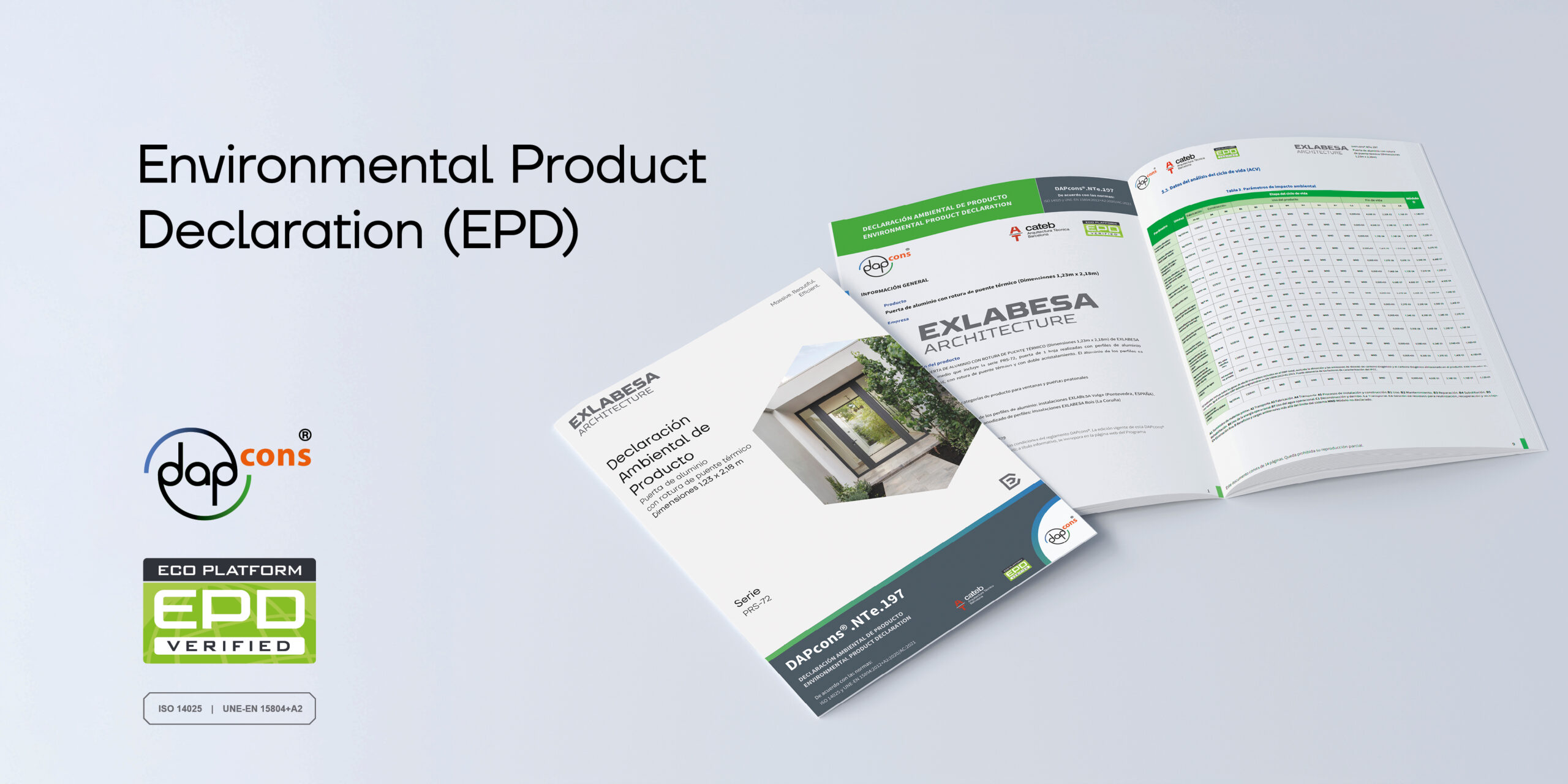
To this end, we offer Environmental Product Declarations (EPDs) for our main systems, based on verified Life Cycle Assessment (LCA) studies. These certifications deliver significant added value by providing rigorous information on environmental impact, enabling architects and developers to design more sustainable, responsible projects aligned with current architectural standards.
Sustainability is also built through informed decision-making.
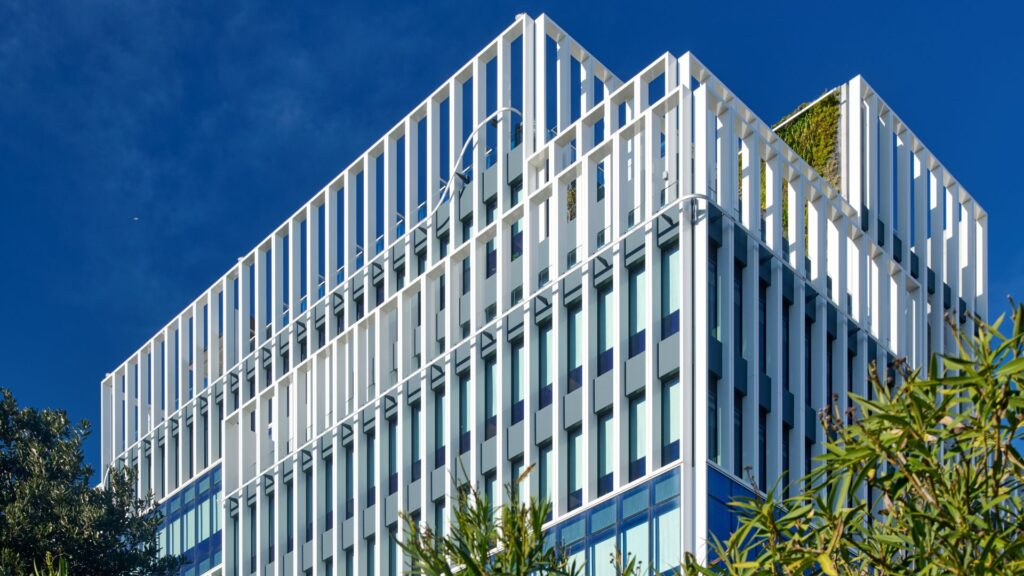
A comprehensive view of the environmental impact of our systems
At Exlabesa, we rigorously assess the environmental impact of our systems through a Life Cycle Assessment (LCA) carried out in accordance with UNE-EN 15804 and UNE-EN 17213 standards.
This assessment covers the complete system — including thermal break profiles, hardware, gaskets and glazing — to provide a comprehensive and accurate overview of the environmental impact of each solution.
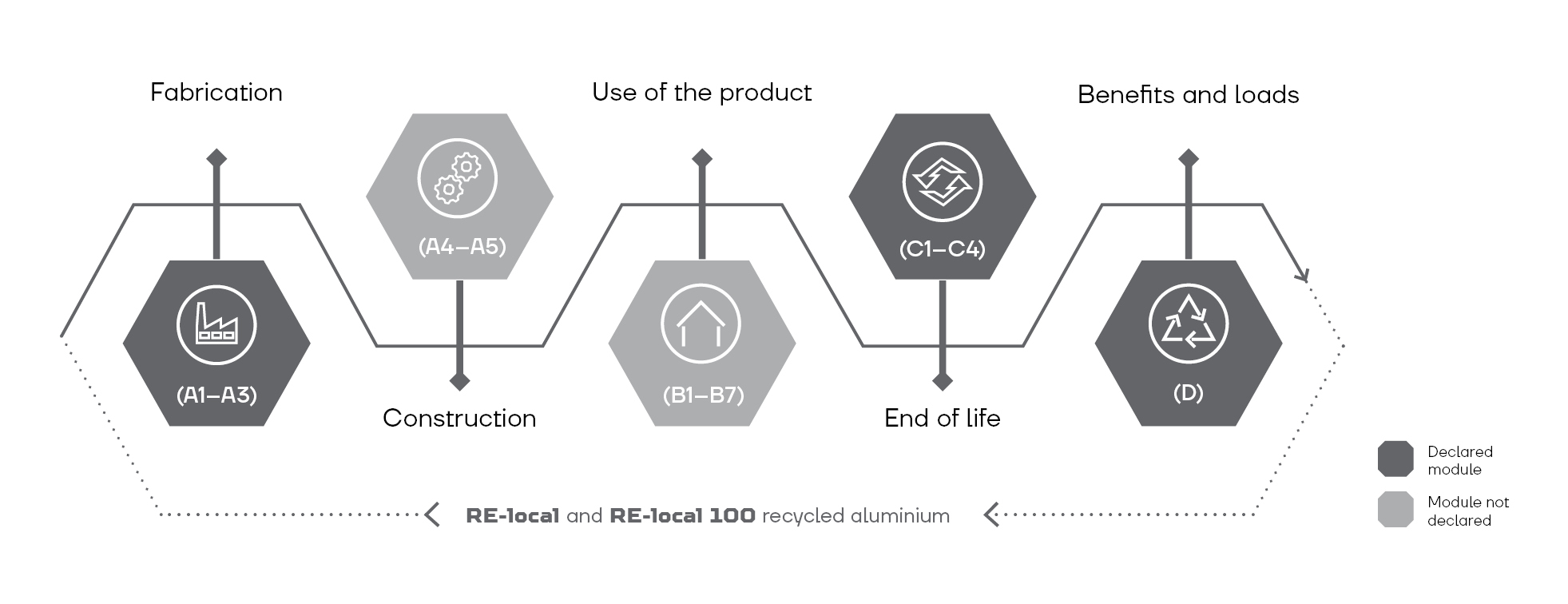
The study covers all stages of the life cycle: from production (A1–A3), through construction, use and maintenance, to end of life (C1–C4). It also quantifies the environmental benefits (Module D) derived from the reintroduction of aluminium into the production cycle through recycling.
Greater clarity for every design decision.
We assess the life cycle of our products
Environmental impact of our systems measured with rigour
At Exlabesa, we rigorously assess the environmental impact of our systems through a Life Cycle Assessment (LCA) carried out in accordance with UNE-EN 15804 and UNE-EN 17213 standards.
This assessment covers the complete system — thermal break profiles, hardware, gaskets and glazing — to provide a global and accurate view of the environmental impact of each solution.
The study encompasses all life cycle stages: from production (A1–A3), through construction, use and maintenance, to end of life (C1–C4). It also quantifies the environmental benefits (Module D) derived from reintroducing aluminium into the production cycle through recycling.
Greater clarity for every project decision.
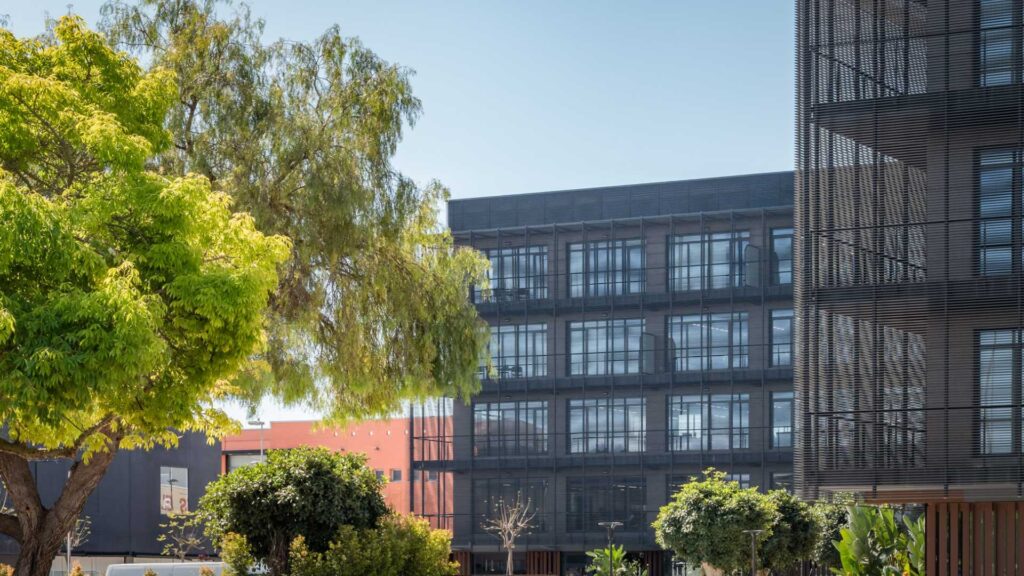
Achieve the highest standards of sustainability in your project

Verde
BREEAM
LEED